ADA Compliant Portable Toilets for Occasions: A Clear Overview to Accessibility Rules
@sergioyblu159
If you have actually ever before intended an occasion, you recognize just how promptly the fundamental logistics end up being the whole experience. Car park, wayfinding, seating, food lines, color, lighting, and restrooms all form whether visitors really feel welcome or locked out. Mobile cleanliness is among those details individuals only notice when it fails. For handicapped guests, it is not a minor detail in any way. It can establish whether participating in fits, difficult, or merely impossible.
That is why ADA gain access to around temporary toilet setups is entitled to careful attention. An ada compliant mobile bathroom is not a good extra for a huge festival or a corporate event. It is part of making the site useful by real people with genuine needs. The federal rules are not mystical, but they are often oversimplified in sales products, and that produces issues. I have actually seen event coordinators assume that buying one larger system solves everything. It does not, at least not immediately. The unit itself matters, but placement, path, signage, and the overall amount issue too.
The most important place to start is the federal standard that regulates this problem in the USA. The managing access criterion for portable toilet services is the 2010 ADA Criteria for Accessible Layout, as interpreted by the united state Accessibility Board and the Department of Justice. For occasion coordinators, place supervisors, rental organizers, and communities, that implies you must consider mobile toilets similarly you consider any kind of other public holiday accommodation function, with scoping needs and technological needs that both matter.
The regulation individuals miss out on most often
For collections of mobile solitary customer commode systems, at least 5 percent of the systems in each cluster must come. That applies even at momentary events.
That one sentence improves a great deal of common complication. If you lay out a financial institution of mobile bathrooms at a performance, road race, college fair, wedding venue, or area party, you do not merely look at the occasion as a whole and choose you have one easily accessible unit someplace on the grounds. The conventional relates to each collection. In technique, that matters since visitors use the washroom nearest to where they are. An individual should not need to go across the occasion, navigate rough https://donovanjftb615.image-perth.org/ada-portable-restroom-rental-comprehending-obtainable-toilet-room-needs conditions, or ask personnel for special instructions due to the fact that the only ada mobile toilet was positioned in a much corner.
This is where people often get floundered by casual language. You might listen to phrases such as ada accessible portable bathroom, ada handicap easily accessible portable restroom, or ada compliant obtainable portable washrooms. Those phrases prevail in the rental market, however the actual concern is not the label on an internet site. The issue is whether the actual implementation satisfies the ADA scoping and technical requirements.
A cluster based technique likewise helps with event design. If your website has one commode team near the primary phase, an additional near food vendors, and a 3rd near the parking area, the 5 percent guideline puts on each grouping, not simply the overall order. That can affect the count you require and the delivery layout you approve.
Accessible does not mean simply larger
A larger cabin alone does not make an unit certified. This is among one of the most pricey misunderstandings in short-term sanitation preparation, since it is very easy to discover as well late.
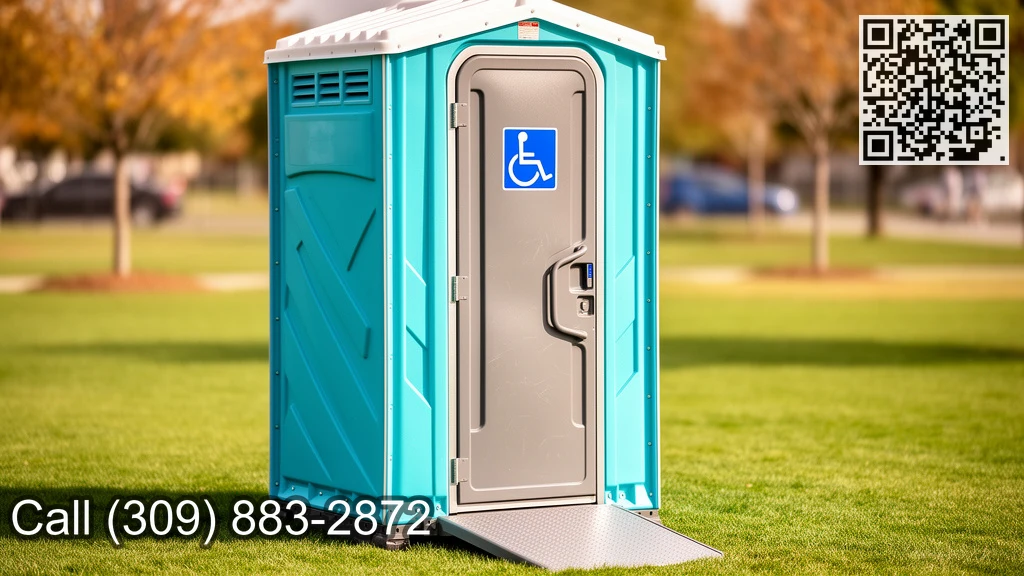
An ada certified portable toilet must meet bathroom space technical requirements. That includes the features and clearances that allow somebody to really utilize the area, not just enter it. The appropriate rules include turning room, fixture clearances, door maneuvering clearances, and the needed grab bar and water closet clearance stipulations. The criteria also need obtainable portable systems to be identified with the International Sign of Accessibility.
Those details matter because access is functional. An individual making use of a mobility device, scooter, walker, or other mobility help requires adequate room to strategy, turn, placement, and exit safely. An unit that looks roomy from the outside can still fall short in operation if the interior format does not sustain handling. The exact same is true of doors. A door that practically opens can still be an obstacle if navigating clearances are not there.
This is why I normally tell coordinators not to rely upon shorthand like "mobility device pleasant" unless they have validated what the rental business is in fact giving. When a person asks whether a device is an ada mobile commode or simply a larger trailer design option, that is a reasonable inquiry. Advertising and marketing terms are not compliance.
The route to the bathroom matters as much as the toilet
One of one of the most aggravating site mistakes is getting the appropriate device and after that placing it where lots of disabled visitors can not reach it.
Accessible mobile commode systems have to have an easily accessible route and entrance. If ramps or landings are required, those components have to follow the ADA technological demands as well. This is where short-lived event reality hits ideal objectives. An area may look flat when vacant, after that become rutted after car traffic or rainfall. A gravel lot might feel convenient to an able bodied coordinator walking it in work boots, after that end up being tiring or hazardous for someone utilizing a flexibility gadget. An aesthetic side, soft shoulder, cord cover, or abrupt incline can turn the easily accessible bathroom into an unattainable destination.
I have actually seen good event groups fix this early by walking the route as if they were a guest showing up from auto parking, not as a professional approaching from the service lane. That change in point of view catches problems that documentation misses. The route ought to be useful, straight, and linked to where individuals actually move with the event.
The entryway area matters equally as much. Also a compliant unit can be jeopardized if it is parked as well near to fence, stacked versus an additional device, or positioned on uneven ground that disrupts access and exit. Mobile commode positioning tends to occur quickly throughout tons in, usually under time stress. That is exactly when blunders take place, especially if the distribution crew is functioning from a harsh map rather than a clear website plan.
Why momentary events are not a loophole
Some coordinators still assume that a pop up event, weekend break festival, or one day charity event falls into a grey area. It does not. The Gain access to Board has actually made clear that the obtainable unit need uses even at short-term events.
That factor deserves duplicating due to the fact that short-lived configurations can create an incorrect sense of flexibility. People often assume the ADA mainly relates to permanent buildings and fixed toilets. In truth, when you give mobile bathroom collections for the public, availability still adheres to. The fact that the systems can be transported away on Monday does not decrease the obligation on Saturday.
The exact same useful reality applies to visitor assumptions. An impaired guest does not experience the event as less genuine because it is short-lived. If they can not utilize the restroom, can not reach it, or can not locate it, the event has actually failed them in a really immediate way.
The building and construction site exemption, and why event planners must be careful with it
There is a narrow item of context that occasionally obtains repeated too broadly. The ADA criteria historically distinguished portable commode devices at construction sites used specifically by building workers. In the mentioned 1991 standard, those were excluded from the mobile toilet availability scoping requirement.
That factor is real, but it is commonly misused. It does not produce a broad exception for basic portable toilet rentals, and it does not clean away availability needs for public occasions. If your toilet setup is for an event available to participants, visitors, customers, viewers, or the public, you need to not think that a building and construction website exemption helps you.
This issues since some rental fleets offer both building and event markets. Systems might be described likewise in discussion, yet the compliance context is various. If you are getting for an event or area gathering, structure the order plainly as event usage and verify that you are getting ada compliant mobile commodes suitable to that use.
Quantity is about self-respect, not just arithmetic
The 5 percent policy offers you a baseline, however good preparation does not stop at the minimum. Ease of access is not just about lawful checking. It is about avoiding a scenario where disabled guests face longer lines, fewer alternatives, or a toilet placed in the least practical location.
At crowded occasions, one available system in a collection might technically fulfill a minimum matter and still produce pressure if the device is greatly used, poorly kept, or hard to reach. I am not suggesting an unstated legal number beyond the criterion. Rather, I am suggesting judgment. If you anticipate high presence, long dwell times, or a broad age variety, it deserves taking a look at your format and asking whether the experience really feels equitable.
That sort of judgment likewise protects the event group. A restroom trouble comes to be a visible friendliness trouble fast. Guests do not separate conformity from treatment. They remember whether the site appeared made for them.
What to ask a portable toilet rental company prior to delivery
Most problems with ada portable toilet rental orders take place because the discussion remains as well general. "We require one handicap device" is insufficient. You want a shared understanding of the system, the path, the signs, and the placement plan.
Use questions like these when you speak with a supplier:
- For each washroom collection on the site, the number of obtainable units are consisted of to satisfy the 5 percent requirement?
- Are the systems identified with the International Icon of Accessibility?
- Does the unit supplied fulfill the suitable ADA toilet space technical demands, including navigating room and clearances?
- What site conditions are needed so the available entry and path continue to be compliant?
- Can the delivery crew position the system specifically where the easily accessible path on our website plan begins and ends?
Those questions are basic, yet they move the discussion far from obscure marketing labels and towards usable answers. They likewise make it simpler to coordinate the bathroom plan with auto parking, pathways, fencing, and crowd flow.
Common event arrangements where ease of access gets overlooked
The most common misses are not dramatic. They are ordinary planning shortcuts.
A country wedding event on personal land may have beautiful views and careful design, but the mobile commodes end up across irregular lawn or down a slope because that location is much less noticeable in images. A charity run might put an obtainable unit near the beginning line, after that add a second commode cluster near the surface area without including an available device there. A downtown road event might buy an ada compliant portable bathroom, after that position it behind barriers or vendor lines that narrow the course. A college event might place the obtainable unit where staff can monitor it, yet much from the rest of the bank, which separates individuals instead of incorporating gain access to into the basic setup.
None of these options always come from bad intent. They generally originate from rate, practice, or a lack of experience with the policies. That is why accessibility planning works best when it starts early, while the website map is still flexible.
Signage is not a small detail
Accessible mobile commode devices should be identified with the International Icon of Access. That is a conformity point, but it is likewise a sensible one. People need to not have to check every device in a row to figure out which one is planned to be accessible.
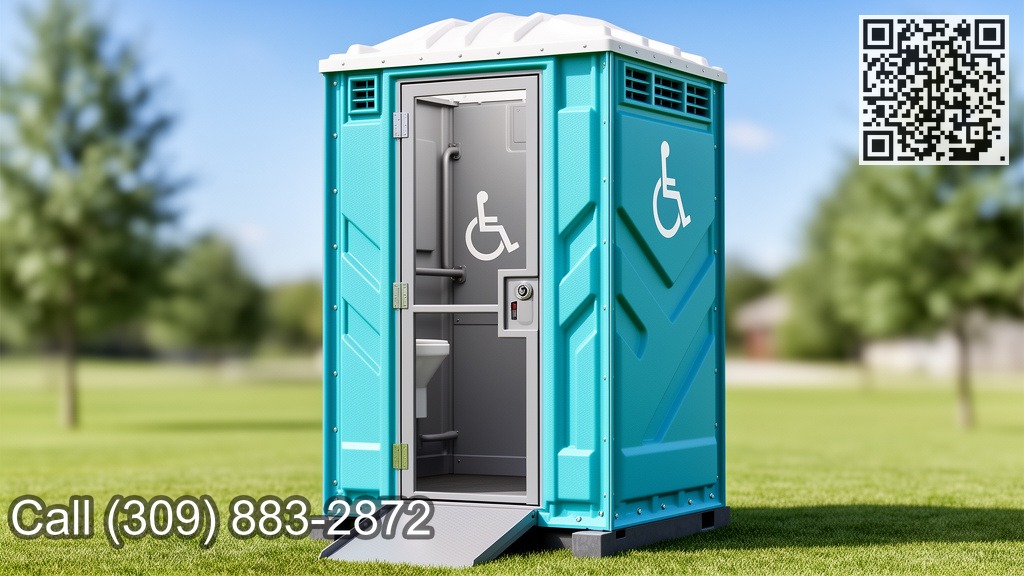
At larger occasions, clear identification minimizes clumsiness and assists staff direct guests properly. It also makes the toilet financial institution easier to navigate for caregivers, friends, and occasion volunteers. Signage will not fix a bad route or a bad design, yet it eliminates uncertainty, and uncertainty is usually the first obstacle a visitor encounters.
The partnership in between compliance and trust
There is a more comprehensive reason this topic matters today. Accessibility enforcement is taking place in a broader compliance environment across fields. The Department of Justice has lately provided guidance prolonging a major web and mobile accessibility target date for certain state and city government entities right into 2027, which shows proceeding ADA task more generally. That does not change the mobile toilet guidelines themselves, but it does underline something seasoned operators currently understand. Ease of access is not wandering right into the history. It is staying on the agenda.
For occasion coordinators, the lesson is uncomplicated. If your group is currently dealing with accessible parking, web site details, ticketing language, or venue communications, restroom preparation belongs in the very same discussion. Visitors experience access as one constant chain. An excellent registration web page does not make up for an unusable washroom area. A certified bathroom unit does not aid much if the course from decrease off to toilet is blocked.
How to think about collections on an actual site
The word cluster can really feel abstract up until you are standing on the premises with a supplier map. Consider a collection as a group of portable single user toilet devices offering a certain area. If your occasion impact is spread out, you might have numerous such groups. Each one requires its very own accessibility review.
This is specifically pertinent for events that increase in phases. Organizers typically begin with one bank on the preliminary plan, then add one more near a beer yard, backstage area, VIP section, or overflow car parking when presence approximates adjustment. That second addition can develop a conformity gap if the accessible count is not recalculated by cluster.
Even tiny occasions can run into this problem. A neighborhood fair with just a handful of systems may still divide them between two ends of the premises. Once you separate the arrangement, you require to quit believing in regards to one sitewide ada available mobile restroom and begin thinking in regards to accessibility any place toilet service is in fact provided.
A humane criterion, not simply a legal one
It helps to keep in mind what this is actually around. An easily accessible bathroom setup offers individuals personal privacy, self-reliance, and an action of simplicity. It implies a guest is not required to request special aid, leave early, or stay clear of eating and drinking since they are not sure whether they can utilize the centers. It allows families to participate in along with much less fear. It tells handicapped guests that their visibility was anticipated, not treated as an exception.
That is why the expression ada compliant mobile toilets ought to imply greater than a box looked at a rental order. It must indicate the washrooms are integrated right into the occasion in such a way that values the people that will count on them. Occasionally that implies ordering more carefully. Sometimes it implies readjusting the site plan, reassessing a pathway, or rejecting a placement that is practical for trucks yet not for guests.
The practical criterion to hold on your own to
When you examine your toilet plan, a couple of questions will tell you whether you get on strong ground. Does each collection include the called for available unit matter? Are the accessible systems clearly determined? Can visitors reach them by an obtainable course? Does the entryway work in real website problems, not simply theoretically? And are you depending on actual ADA technological compliance as opposed to a sales description?
If the solution to any of those inquiries is uncertain, time out and fix it before delivery day. Mobile restroom concerns end up being much tougher to remedy when the website is active, the group is in place, and climate or traffic has actually changed the ground conditions.
An ada-compliant portable commode is not just a larger box beside an event. It is part of the occasion's framework, equally as real and crucial as lights, fencing, or first aid. When occasion planners treat it by doing this, the outcome is not just far better compliance. It is a more welcoming event, and guests can feel the difference.
 Ask ChatGPT
 Ask Grok
 Ask Perplexity
 Ask Claude
 Ask Google AI
 Ask You